INTRODUCTION:
Every year, hundreds of nursing students complete their GNM or BSc Nursing in Agra and nearby cities. They clear exams, complete clinical postings, and receive their certificates. Yet when they enter their first hospital job, many experience the same feeling: “I know the theory… but I’m not confident handling patients alone.” If you are a final-year nursing student or a fresh graduate, this article will help you understand why this happens — and what you can do to become truly hospital-ready.
The Reality Gap Between Nursing College and Hospital Duty Nursing education in India focuses heavily on theory and structured clinical postings. However, real hospital environments are different. In a hospital: • Patients are unpredictable. • Emergencies happen without warning. • Documentation must be precise. • Senior doctors expect quick responses. • You may be responsible for multiple patients at once. The transition from student nurse to professional nurse is often overwhelming. This is not because students are incapable. It is because they were not trained for real-time responsibility.
5 Reasons Fresh Nursing Graduates Struggle in Their First Job
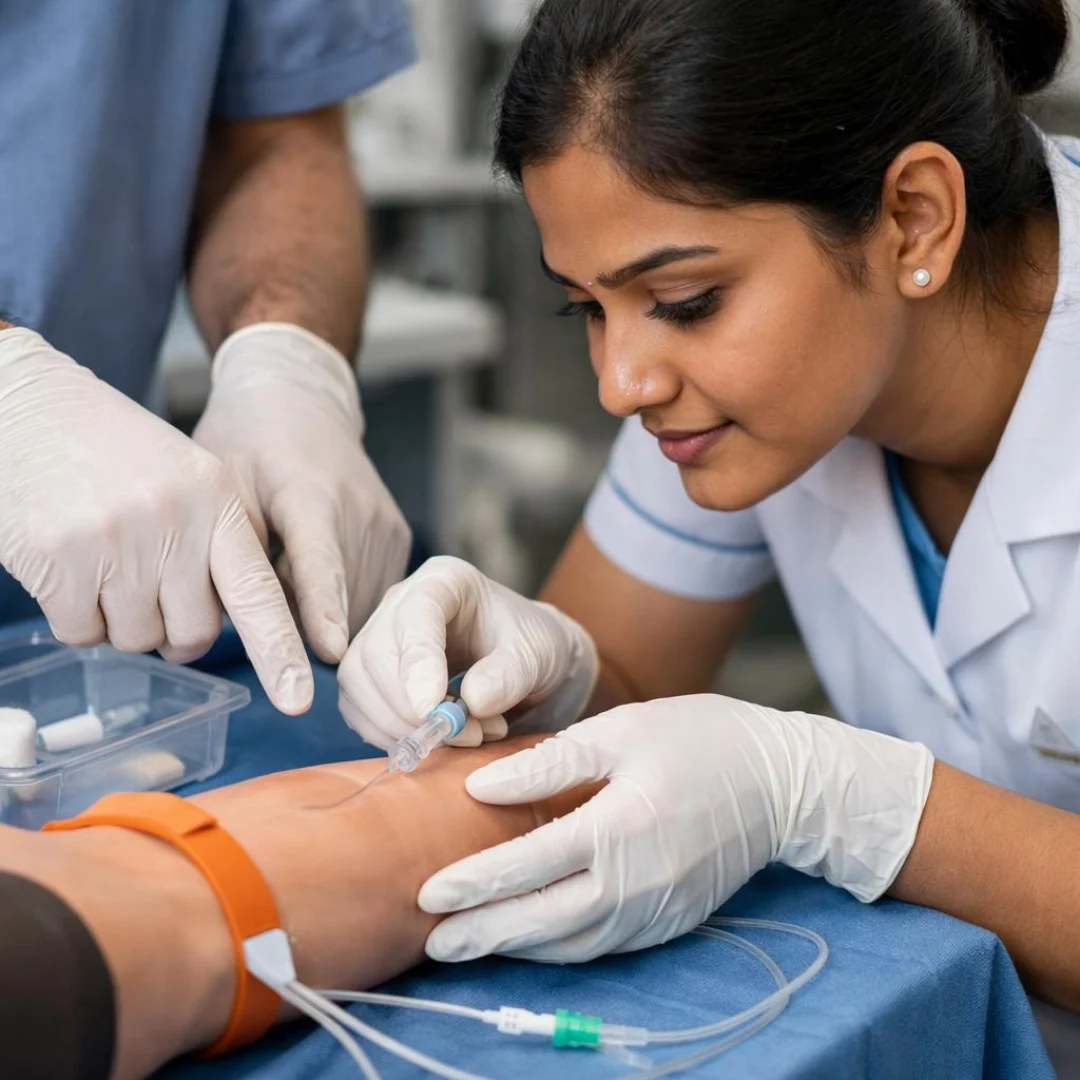
1- Lack of Hands-On Confidence During college, procedures are often supervised closely. In a real hospital setting, you may be expected to: • Insert IV lines independently • Monitor vital signs accurately • Identify early warning signs • Respond to patient deterioration Without repeated hands-on simulation practice, confidence remains low.
2 – Limited Exposure to ICU Basics Even if you don’t immediately join ICU, understanding ICU fundamentals is critical. You should know: • How monitors display vital parameters • Basic oxygen therapy management • Emergency drug awareness • What happens during Code Blue Many fresh graduates have only theoretical exposure. Hospitals expect operational understanding.
3 – Weak Documentation Skills Proper nursing documentation is not optional — it is legal protection. Common struggles include: • Writing clear case notes • Drug chart entries • Shift handover communication • Maintaining patient records under time pressure Documentation errors reduce hospital trust quickly.
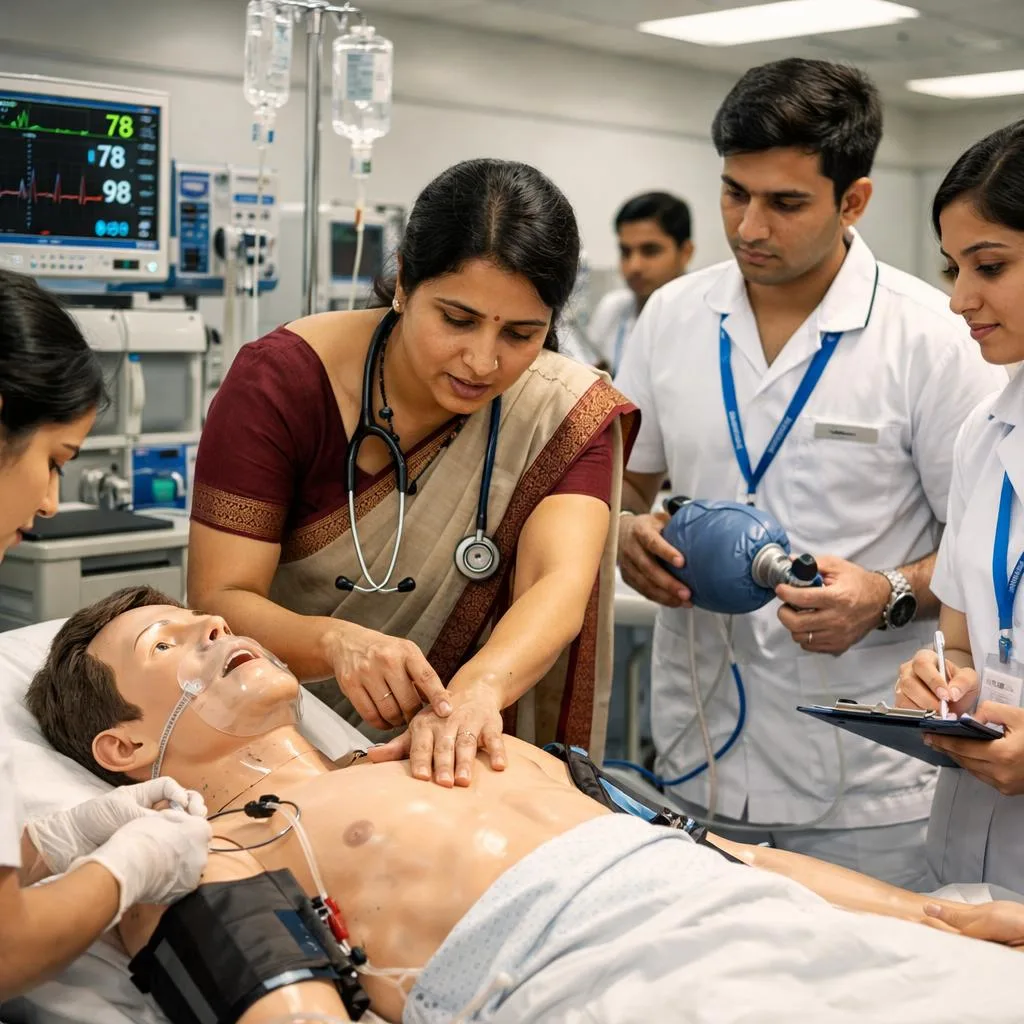
4 – Fear of Emergency Situations CPR and emergency protocols are often practiced once or twice during college. But in real life, emergencies require: • Calm decision-making • Speed • Team coordination Without repeated drills, fear overrides knowledge.
5 – Lack of Professional Discipline Training hospitals value: • Punctuality • Grooming • Communication • Responsibility Many graduates underestimate how important professional behavior is in healthcare settings. Skill + discipline = employability.
What Does “Hospital-Ready” Actually Mean? Being hospital-ready does not mean just holding a degree. It means: • You can handle patients independently • You understand ICU basics • You can perform documentation confidently • You can respond to emergencies calmly • You behave like a professional healthcare worker Hospitals prefer nurses who require minimal onboarding. That is what increases job security and growth opportunities.
The Role of Practical Simulation Training One of the most effective ways to bridge the gap between college and hospital is structured simulation-based training. Simulation training allows you to: • Practice IV insertion repeatedly • Perform CPR drills • Handle mock emergency scenarios • Practice documentation under supervision • Experience full-shift simulations Confidence comes from repetition. Repetition builds competence. Competence builds career growth.
Nursing Career Growth in Agra – Why Skill Matters Healthcare in Agra is expanding. Private hospitals are increasing. Specialty units are growing. Patient expectations are higher. This means: Hospitals are looking for skilled and reliable nurses. If two candidates apply: One has only a degree. One has practical, ICU-oriented training. Who do you think will be preferred?
How HealBridge Academy Bridges This Gap At HealBridge Academy in Agra, we designed the 1-Month Nursing Excellence Program specifically to address this reality gap. The program focuses on: • 100% practical, simulation-based training • ICU basics and emergency drills • Real hospital documentation practice • Professional discipline and shift readiness • Performance-based assessment Our goal is simple: Reduce hospital onboarding time. Increase student confidence. Improve employability. We do not promise shortcuts. We build competence.
Who Should Consider Advanced Practical Training? This program is ideal for: • Final-year GNM or BSc Nursing students • Fresh graduates lacking confidence • Nurses preparing for private hospital jobs • Those who want ICU exposure basics • Students who want to stand out in interviews If you feel nervous about your first hospital duty, that is a sign you need more practical exposure. And that is completely normal.
Final Thoughts Struggling in your first job does not mean you are not capable. It simply means the system did not fully prepare you for real hospital pressure. The solution is not fear. The solution is preparation. Before stepping into a full-time hospital role, ask yourself: “Am I truly hospital-ready?” If you believe you need structured, hands-on training to boost your confidence, consider exploring programs that focus on practical excellence. Your career deserves more than just a certificate. It deserves confidence, competence, and clarity.




 HealBridge Academy